Kitchen Order Queue: One Line for QR and Counter Orders
Operations · 2026-11-08 · 4 min read
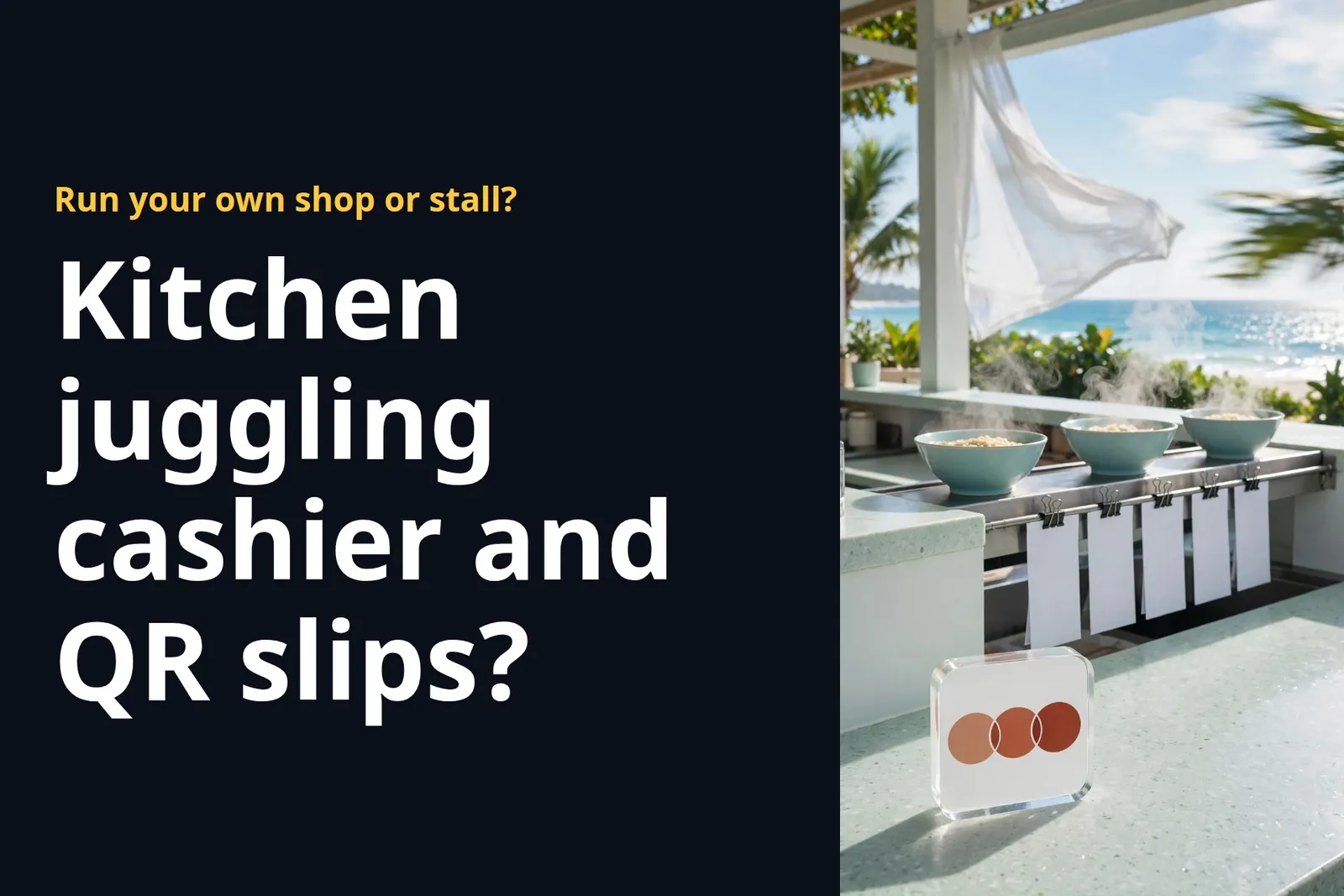
A kitchen order queue that mixes table QR and counter orders by arrival time keeps service fair and stops cooks juggling two piles.
Why one kitchen order queue matters
A kitchen order queue is the line of tickets the cooks work through, from the oldest order to the newest. In a small cafe or food stall with table QR ordering, orders arrive from two places: guests who scan the code at their table, and guests who order at the counter. When those two streams land in the kitchen as two separate piles, the queue stops being a queue. The cooks have to guess which order came first.
That guess is where service goes wrong. A table that ordered by QR ten minutes ago waits, while a counter order placed just now goes out first. The guest who waited longer sees others eat before them, and the staff only find out when someone walks up to ask.
The habit many owners slip into
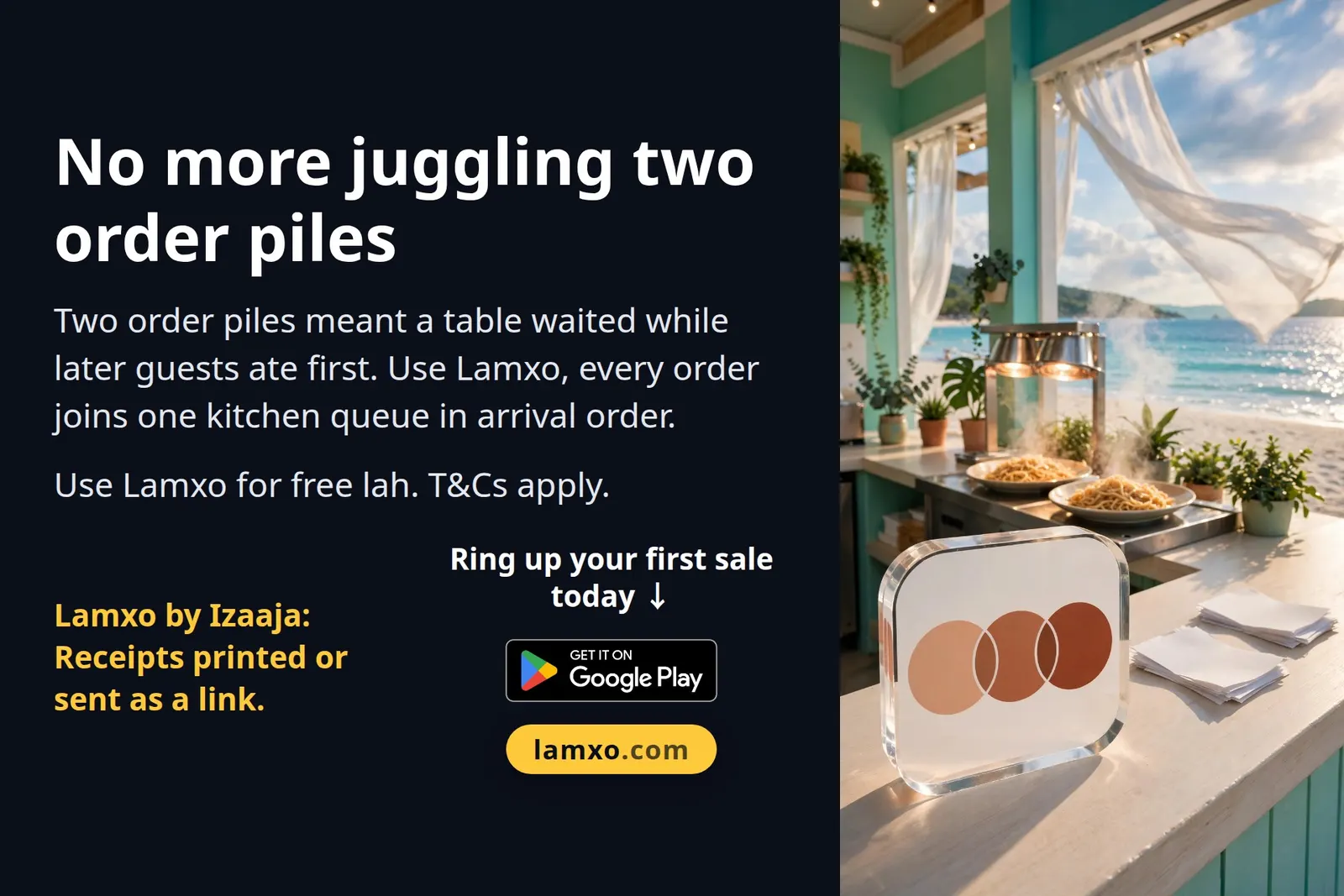
Many owners add table QR ordering to save the cashier some work, and it does. But the kitchen side often stays the same as before. Counter orders print on one printer or come as handwritten slips. QR orders appear on a phone or a different printer. The cooks keep two piles and juggle them by feel.
The habit is quiet, because on a slow afternoon it works. Two piles of three tickets each are easy to handle. On a weekend lunch at a beach cafe, with guests ordering from both places at once, the piles grow, and the order of arrival is lost.
What two piles cost
The first cost is fairness. Guests notice when a table that sat down later is served first. They do not care which pile their order was in. They only see that they waited longer.
The second cost is mistakes. When cooks switch between piles, tickets get skipped, or the same dish is made twice. Food sits under the heat lamp while someone checks which pile it belongs to.
The third cost is speed. Time spent sorting slips is time not spent cooking. On a busy day, a few seconds per ticket adds up to a long wait for the last tables.
How Lamxo handles it
In Lamxo by Izaaja, orders from table QR and orders from the cashier go to the same kitchen ticket list, arranged by the time each order came in. The cooks see one queue. The oldest order is at the top, whether it was placed at the table or at the counter. There is no second pile to check and no sorting by memory.
This works for restaurant outlets, where tables and kitchen tickets are part of the setup. For the cashier, nothing changes in how counter orders are taken. For the kitchen, the change is simple: one list, read from top to bottom.
Example from a beach cafe
Picture a beach cafe on Sentosa with fifteen tables and a counter for takeaway drinks and snacks. On weekends, about half the guests order by scanning the QR code on their table, and the rest order at the counter.
Before, the kitchen kept QR orders on a tablet and counter orders as printed slips. During the lunch rush, a family that ordered by QR at the start of the rush waited while several counter orders placed after them went out. The server only noticed when the family asked about their food.
After moving both streams into one kitchen queue, the cooks simply work from the top. The family that ordered first is served first. Counter guests still get their snacks quickly, because their tickets sit in the same line by time, not at the bottom of a forgotten pile.
Setting up your kitchen for one queue
A few steps help the change go smoothly:
1. Make sure every table has its QR code and that the code points to the right table number. 2. Agree that the kitchen works only from the shared ticket list, not from paper notes or messages. 3. Brief the cashier that counter orders now join the same line, so there is no need to shout them to the kitchen. 4. Watch one busy service and see whether any table waits longer than the ones around it.
What to keep in mind
Table QR ordering saves time at the counter, but only if the kitchen sees all orders in one place. Two piles turn a simple line into a guessing game. One kitchen order queue, sorted by arrival time, keeps service fair and lets the cooks focus on cooking instead of sorting. When guests are served in the order they asked, the whole room feels calmer.
The limits
Kitchen tickets and table QR are for restaurant outlets.
Guides by type of shop: POS for cafés and restaurants — Open orders per table or takeaway, send them to the kitchen screen and printer, let guests order via a table QR, and split the bill per guest.
Try Lamxo free for 30 transactions every 30 days.