Store Exchange Policy for Small Shops: Rules and Counter Steps
Operations · 2026-11-20 · 5 min read
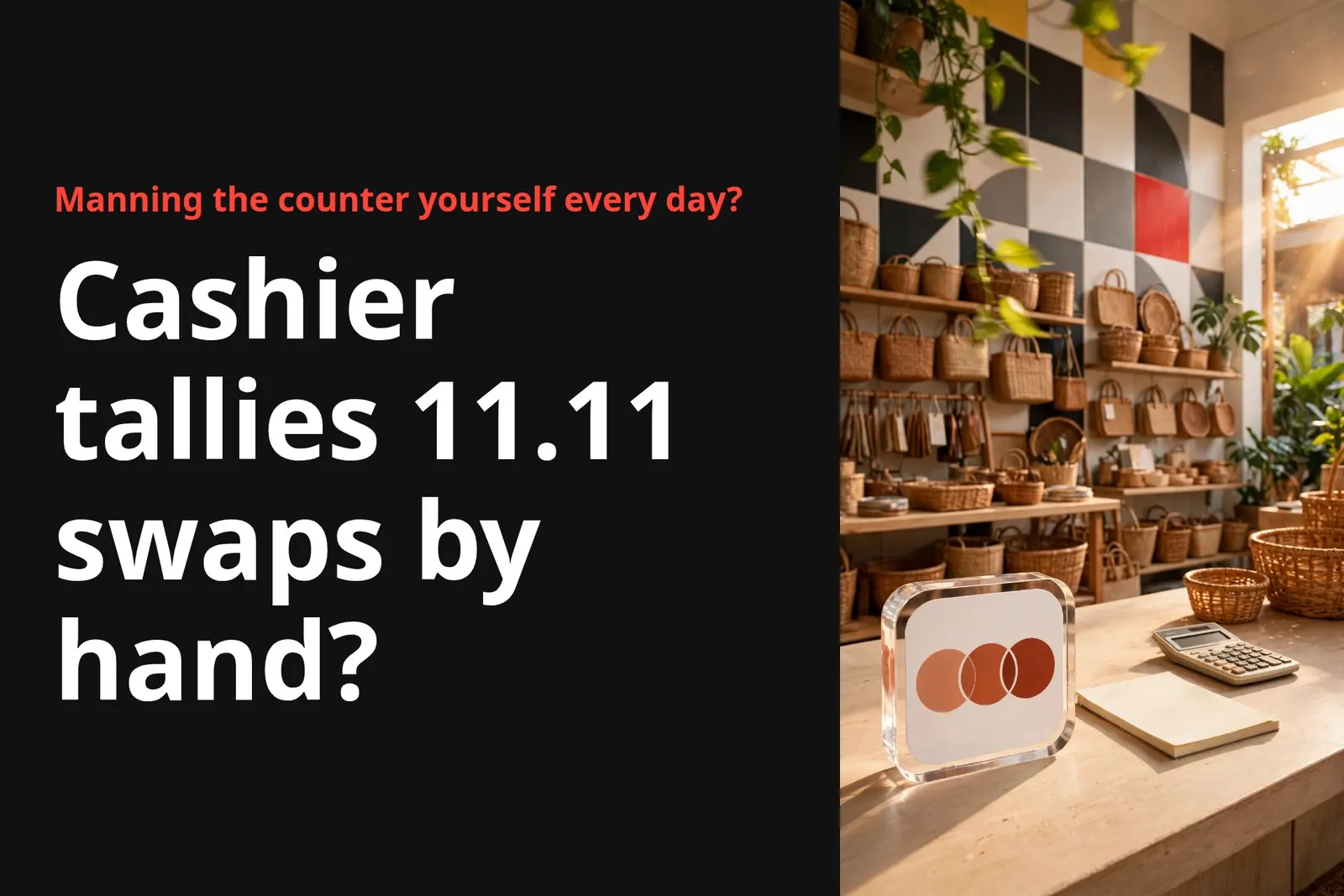
What to put in a store exchange policy, how it differs from a return policy, and how cashiers handle swaps for pricier items after big sale days.
What a store exchange policy is
A store exchange policy is the short set of rules that tells shoppers when they can swap something they bought for something else. An exchange is different from a refund. With a refund, money leaves the shop. With an exchange, the shopper walks out with a different item and the money stays in your till. For a small shop in Singapore, a clear exchange policy keeps sales in the shop, cuts arguments at the counter and gives every cashier the same answer to give.
Without written rules, every exchange becomes a negotiation. One cashier accepts a worn item, another refuses a clean one, and the regular who was turned away tells friends. A policy of five or six lines solves most of this.
What to put in an exchange policy
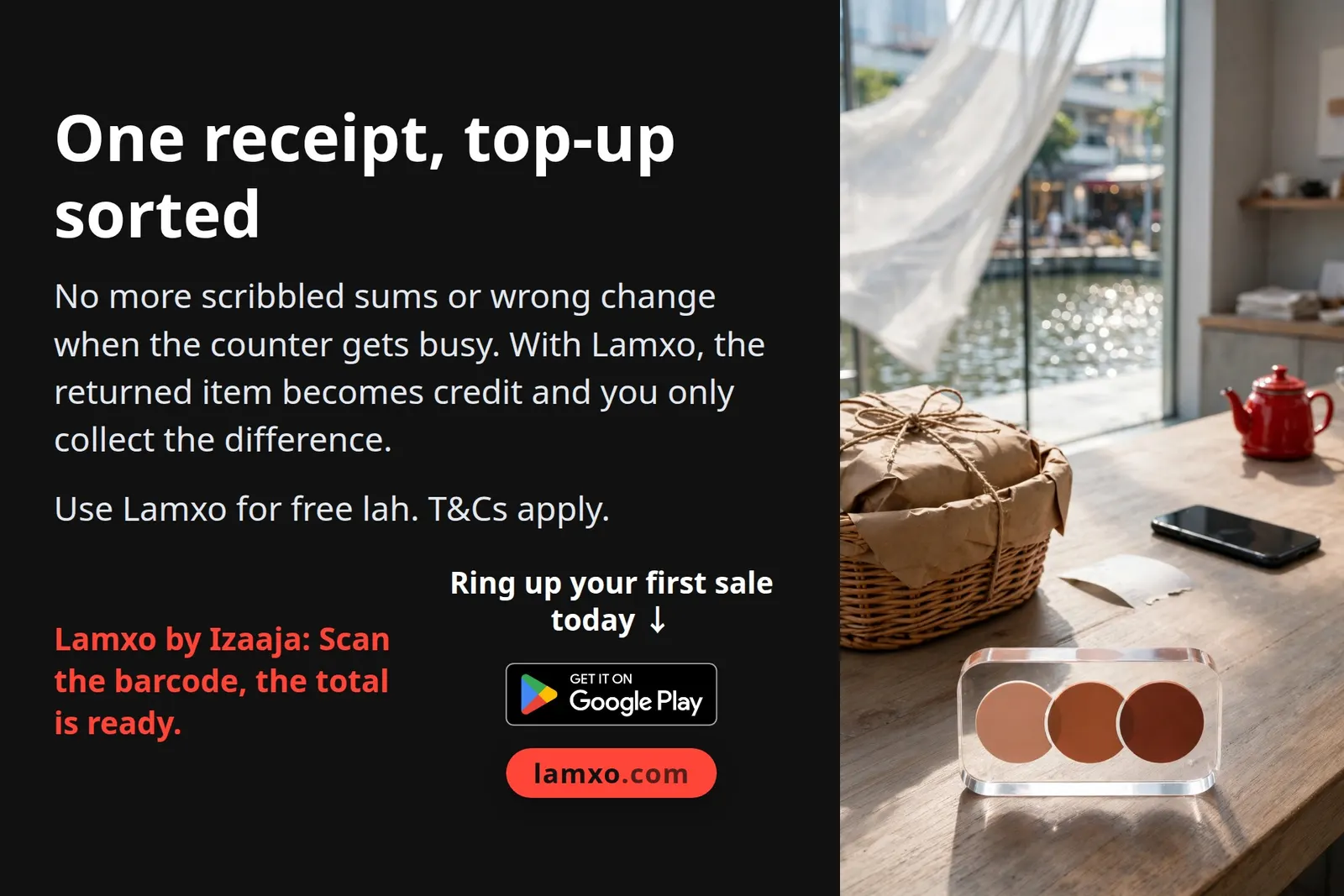
Start with the time limit. Seven or fourteen days is common for small shops, and the clock starts from the date on the receipt. Next, state the condition: unused, with tags or original packaging. Then say what proof is needed, usually the receipt or the sale record. List exclusions plainly, such as food, underwear, items sold as is and custom orders. Finally, say what happens to the price: whether the shopper can pick something cheaper, the same price or more expensive, and how the difference is settled.
How to return policy rules differ from exchange rules
Many shops write one return and exchange policy, but the two need different lines. A return policy decides when you give money back. An exchange policy decides when you swap goods. Some shops allow exchanges for change of mind but only give refunds for faulty goods. Keep both in the same notice so shoppers see the full picture, but write them as separate sentences so cashiers do not mix them up.
Exchanging for a pricier item at the counter
This is where most counters slow down. A shopper returns a $25 basket and picks a $40 one. The cashier needs to take back the first item, find what was actually paid for it, and collect the $15 difference. If the first item was bought on discount, the value is lower than the shelf price, so the difference is bigger than it looks.
Step 1 — Find the original receipt and note the price actually paid, after any discount.
Step 2 — Take back the returned item and treat its paid value as credit for the new one.
Step 3 — Ring up the new item, subtract the credit and collect only the difference. If the new item is cheaper, decide from your policy whether the balance is returned or kept as store credit.
Step 4 — Issue one new receipt that shows both items, so the next cashier can follow what happened.
Exchanges after a big sale day
After a big sale like 11.11, exchanges come in waves. Sizes were wrong, colours looked different at home and gifts were doubled up. The prices on those receipts are lower than usual, so working out the difference by hand goes wrong more often. Put an extra line in your policy for sale items, such as exchange only within seven days and only for the same item in another size or colour, if that fits your shop.
How to exchange in store without a queue
Train every cashier on the same steps, keep the policy printed at the counter and on the receipt, and let only a supervisor approve exchanges outside the rules. When the steps are the same every time, an exchange takes a minute and the queue keeps moving.
Common problems with exchange policies
The first problem is a policy nobody can see, so shoppers argue at the counter. The second is cashiers bending rules for friends, which makes the policy feel unfair. The third is losing track of returned goods, so stock counts drift. Fix the first with a visible notice, the second with supervisor approval and the third by recording every exchange as a sale.
Handling exchanges with Lamxo
In Lamxo, a cashier opens the receipt in the sale history and picks the exchange option. The cashier page opens with the returned value as credit, the shopper pays the difference, and every void, return and exchange needs a supervisor's name and PIN on the cashier's device.
The limits
General guidance for small physical shops. Prices in the examples are illustrations; check consumer rules that apply to your business.
Try Lamxo free for 30 transactions every 30 days.